July 30, 2026
Understanding the common pitfalls of DIY garage epoxy projects and learning professional application methodologies can transform your garage floor into a stunning, highly resilient architectural asset. While mass-market retail kits promise absolute simplicity and cost efficiency, achieving a professional-grade, mirror-like finish requires far more than just following basic box instructions. Few property owners realize that replicating the high-gloss aesthetic seen in professional commercial installations involves a deep understanding of multi-component polymer chemistry, rigorous industrial surface preparation, and specialized mechanical skill. This article provides a comprehensive examination of structural layout requirements, breaks down why amateur liquid coatings fail, and outlines the precise steps utilized by elite contractors to establish flawless results. By investing the necessary time into a multi-tiered structural strategy, you protect the core integrity of your concrete slab while maximizing the aesthetic value of the space. Transitioning your workspace into a clean, functional environment relies on avoiding standard application errors and using chemical barriers that are engineered to survive real-world garage abuse.
Mastering Polymer Chemistry
Epoxy is an advanced copolymer formed from the precise chemical cross-linking of volatile epoxide resins and specialized polyamine hardeners. When these liquid components are thoroughly blended, they trigger an exothermic reaction that alters the material structure into a rigid, cross-linked plastic matrix. This specialized molecular configuration yields exceptional tensile strength and unmatched chemical resistance, making it an ideal protective barrier for high-traffic concrete slabs. Homeowners must understand that the long-term performance of this coating relies entirely on the exact atomic balance achieved during the initial mixing phase. An uncalibrated ratio or incomplete chemical reaction will permanently compromise the structural integrity, surface adhesion, and final aesthetic presentation of the floor.
Selecting Formulation Types
The modern architectural market offers a diverse spectrum of specialized resinous formulations tailored specifically to distinct environmental exposures and mechanical demands. Water-based options deliver minimal chemical odor and slower curing times, making them highly popular for entry-level amateur applications despite their thin dry-film thickness. In contrast, heavy-duty solvent-based and 100% solids industrial variations provide dense cross-linking that yields superior impact resistance and chemical immunity against hot-tire pickup. Incorporating professional epoxy concrete flooring layouts allows you to choose between standard solid tones, multi-colored decorative flakes, and three-dimensional metallic pigments. Selecting the correct chemical formulation demands an accurate evaluation of your workspace layout, subsoil dampness variables, and the specific equipment available.
Evaluating Market Metrics
The widespread popularity of premium resinous coatings stems directly from their ability to permanently seal porous masonry while providing an easily cleanable surface. This seamless barrier fully shields the underlying foundation against motor oil penetration, winter road salts, and heavy mechanical impacts. Furthermore, the brilliant light-reflective properties of a high-gloss topcoat radically improve spatial physics by multiplying ambient illumination throughout dark workspaces. According to data published by The Business Research Company, the market for concrete floor coatings is projected to expand significantly over the coming years, reaching a valuation of $2.42 billion by 2029 through a steady compound annual growth rate of 7.6%.
Identifying Optimal Environments
Deploying a premium resinous floor is highly recommended when a space demands an absolute equilibrium between industrial-grade resilience and high-end visual luxury. These heavy-duty applications serve as excellent solutions for high-traffic residential garages, commercial showrooms, aeronautical hangars, and manufacturing facilities. Prioritizing a professional epoxy concrete flooring project ensures your slab remains completely impervious to corrosive battery acids, intense thermal shock, and continuous tool drops. Evaluating the specific temperature swings, localized chemical risks, and active weight loads of your environment helps determine the exact primer, body coat, and clear topcoat configuration required. This systemic analysis prevents premature coating failure and ensures the finished installation satisfies your structural requirements.
Vetting Product Formulations
Investing in commercial-grade, high-solids raw materials is completely essential because cheap retail paint alternatives lack the necessary polymer density to resist heavy wear. Cheap DIY kits are routinely watered down with high percentages of water or volatile organic solvents, leaving behind an incredibly thin, fragile dry film once the liquid evaporates. Specifying a professional epoxy concrete flooring system guarantees your surface receives a thick, durable layer of 100% solids resin that fills minor masonry pores automatically. Professional-grade materials maintain superior molecular cross-linking, providing robust chemical resistance, maximum color retention, and an outstanding physical gloss that lower-grade retail paints cannot deliver.
Sealing Structural Fractures
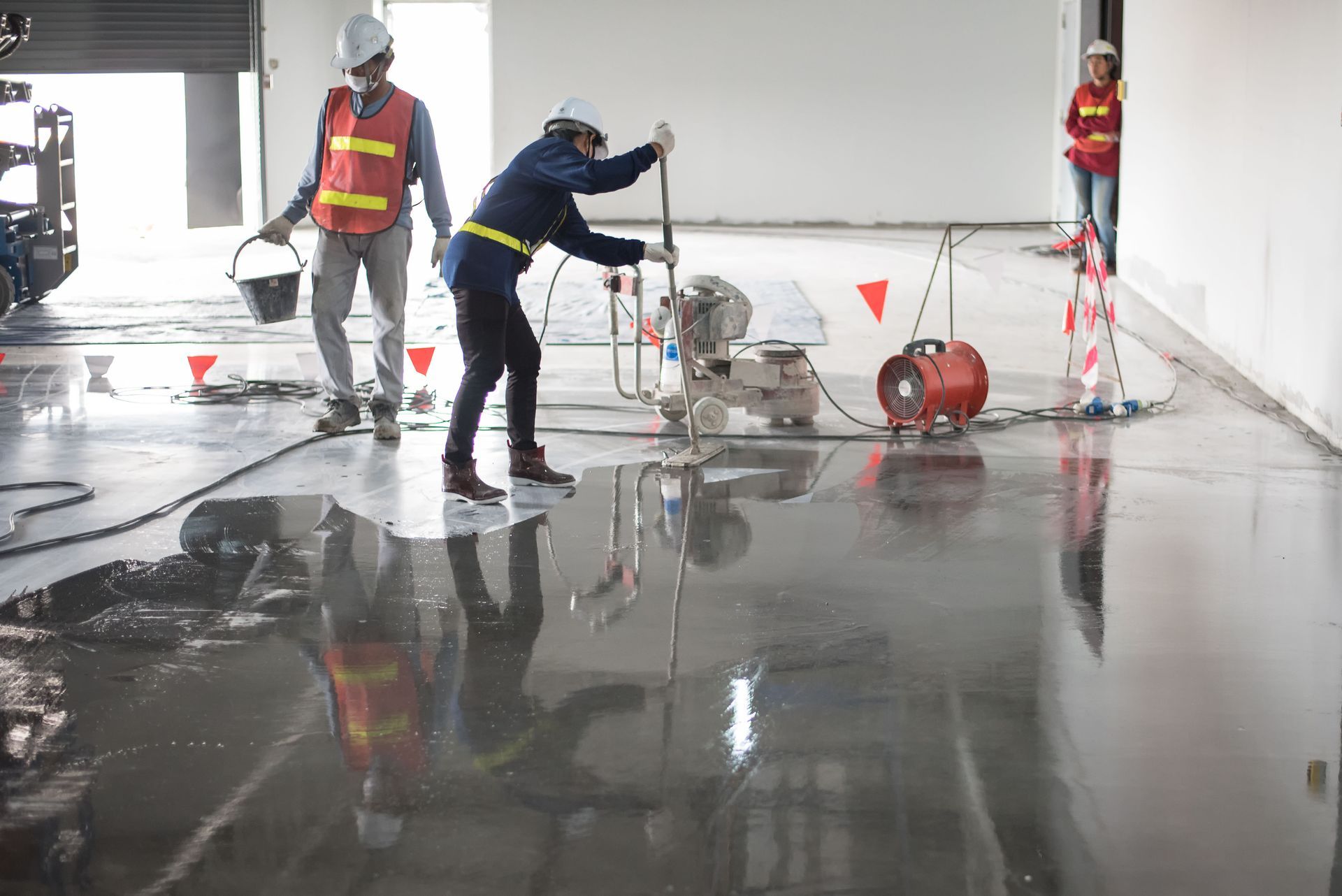
All visible stress cracks, deep spalls, and pitted concrete imperfections must be completely repaired prior to coating application to prevent reflective cracking in the final topcoat. Technicians utilize diamond-bladed chasing saws to open up hairline fractures, clearing out loose debris before packing the voids with high-strength epoxy gel fillers. These specialized polyurea and epoxy patch compounds cure significantly harder than the surrounding concrete, completely halting future structural movement. Sanding these patched zones perfectly flush with the surrounding floor layout permanently eliminates surface irregularities. This precise smoothing process ensures the incoming liquid body coat lays perfectly flat, creating a seamless presentation across the entire room.
Measuring Subsoil Dampness
Trapped vapor emissions within concrete slabs represent an invisible threat that can easily destroy a premium resinous floor months after installation. Conducting professional moisture testing using specialized relative humidity probes or calcium chloride kits is mandatory before mixing any liquid chemicals. Amateurs routinely ignore this step, trapping moisture beneath an airtight polymer sheet and triggering osmotic blistering that ruins the floor. Incorporating specialized epoxy concrete flooring primers allows you to introduce advanced moisture vapor barriers engineered to withstand up to 25 pounds of hydrostatic pressure. This protective moisture mitigation step permanently isolates the topcoats from sub-slab water pressure, ensuring long-term adhesion.
Distributing Decorative Media
Incorporating custom color pigments or multi-colored vinyl flakes allows property owners to create highly personalized, non-slip textured surfaces. Spreading these vinyl flakes requires an expert hand to ensure an absolutely uniform broadcast without creating ugly pigment clumps or barren spots across the wet resin. Specifying a professional epoxy concrete flooring flake system gives you a textured finish that masterfully hides underlying masonry imperfections and minor tool marks. Expert crews throw the decorative media high into the air, allowing the individual chips to fall softly and evenly into the wet base coat for an immaculate presentation.
Refreshing Aged Finishes
Executing a periodic re-coating schedule is an exceptional, highly proactive strategy to completely revitalize an aging resinous floor after a decade of heavy duty. Instead of paying for an expensive total floor removal, technicians simply scuff the existing topcoat to create a mechanical profile and apply a fresh clear coat. This simple re-coating process instantly erases years of microscopic surface wear, returning the entire floor layout to its original showroom glory. Professional installation teams accurately evaluate the condition of your existing system to determine the perfect timing for a refresh, permanently extending the financial advantages of your floor. By taking this preventative step early, property owners actively prevent deep scratches from ever penetrating the base colored system, ensuring the underlying foundation remains safe from external harm.
Maximizing the structural durability, chemical resistance, and visual luxury of your workspace demands a dedicated commitment to industrial-grade masonry engineering and precise polymer application. Transforming a stained, cracked concrete garage floor into a beautifully integrated, mirror-like sanctuary completely eliminates the peeling, bubbling, and hot-tire failure hazards that continuously ruin standard DIY retail kits. This strategic asset upgrade delivers permanent peace of mind, dramatically lowering your monthly cleaning obligations while fortifying the long-term real estate equity of your home. To secure a flawless, factory-certified layout engineered specifically to survive your regional climate demands, schedule your design consultation with Garage Guru.